
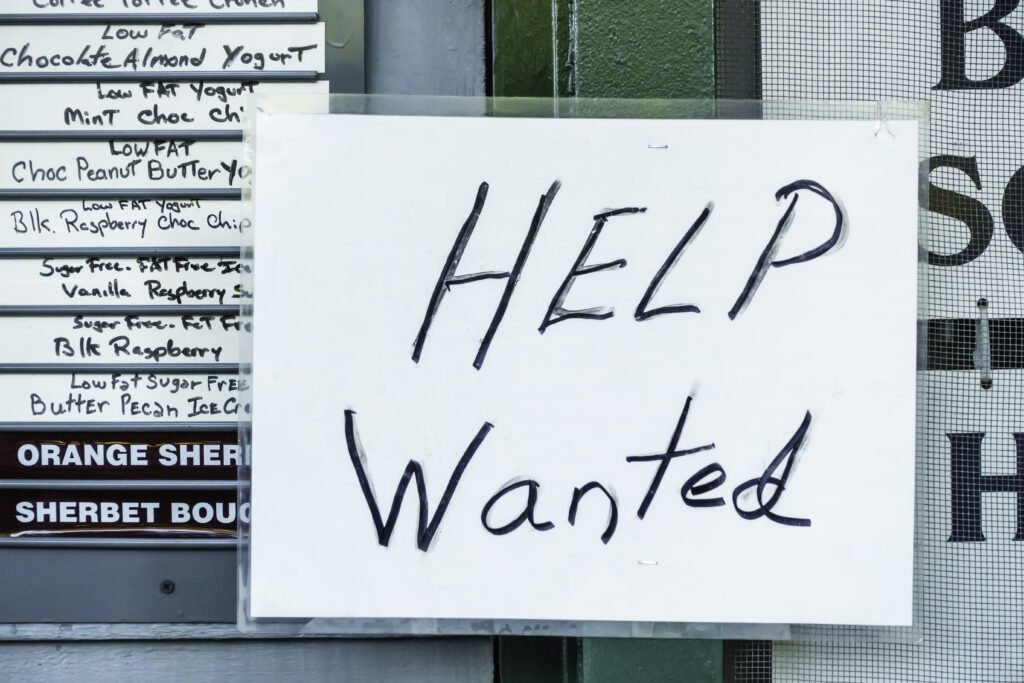
Ask most small business owners whether AI has cost anyone a job and you'll hear no. Ask whether AI changed their last hiring decision and the answer gets more interesting. New survey data puts the real effect of small business AI hiring decisions in a quiet place, the opening that never gets posted.
PYMNTS Intelligence surveyed 533 U.S. small and mid-size businesses in August for its report AI Goes to Work. Six in 10 AI users said they now produce more work without adding staff. Thirteen percent skipped a hire they otherwise would have made, while 3.3% laid someone off because of AI. So skipped hires ran about four times as common as layoffs, and roughly three quarters of AI users hadn't scaled back human work in any of the ways the survey measured.
Why small business AI hiring looks like this right now
Part of the answer is the labor market owners are stuck with. NFIB's September jobs report found 32% of owners with openings they couldn't fill, and 26% named labor quality or availability as their single biggest problem. When a front desk job has sat open for three months, a tool to draft quotes or answer after-hours booking questions feels less like a replacement and more like a stopgap. Research from the New York Fed adds a wrinkle. In its 2025 Small Business Credit Survey data, firms using AI were more likely than non-users to expect higher employment over the next year, and 77% of respondents reported no change in labor costs from AI.
The PYMNTS data has a second number worth sitting with. Twenty-three percent of businesses said they gained customers who specifically wanted a person doing the work, and 21% have leaned on the human touch in their marketing or plan to. Customers notice who picks up the phone.
Decide what stays human before you skip the hire
The useful question for an owner is which work a person should own on purpose. Think of calls with a complaint in them, a quote for a job you've never done before, anything where a wrong answer costs you a customer. Let AI take the drafts, the sorting and the first pass on the books, with someone checking the output. Write the split down before you decide the next role isn't needed. Once a job goes unposted, nobody revisits the call.
Growing firms in the PYMNTS sample were the most likely to skip a hire, 16% against 10% for businesses with flat revenue. Running lean works fine until the one person who knows how a process runs is out sick for a week. If AI is quietly filling your next opening, give somebody the job of checking its work.